Overview
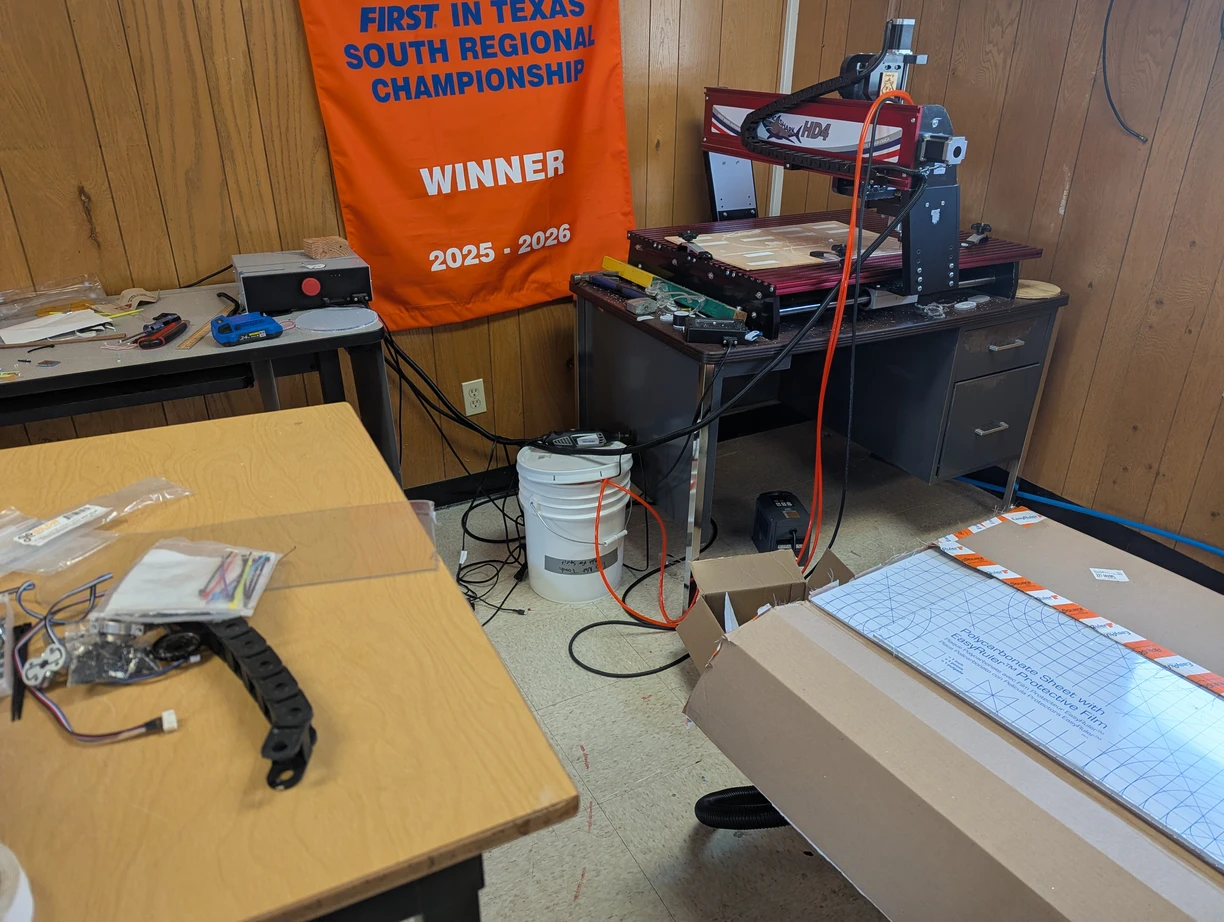
Our CNC setup, featuring the Shark HD4
The CNC is a machine that cuts stuff by moving a bit that spins very fast. We mainly use the CNC to cut out sheets of material for the robot, like for a parallel-plate drivetrain. Our model is the Shark HD4. It's not very good, and it's missing some bolts on the gantry (plz fix), but it's capable enough for the polycarbonate and wood we usually cut.
For the pedants
The proper name for this is the CNC router. CNC stands for computer numerical control, and a router is not the only machine that can be used this way. I don't feel like writing CNC router every time, though, so I'm not gonna.
| Spec | Description |
|---|---|
| Bed Size | 25" x 25" |
| Spindle RPM | 8,000-24,000 rpm |
| Collets | ER11, 1/4" and 1/8" bit diameter |
| Fast | No |
Below, you'll find a brief rundown about the parts of the CNC.
Pendant
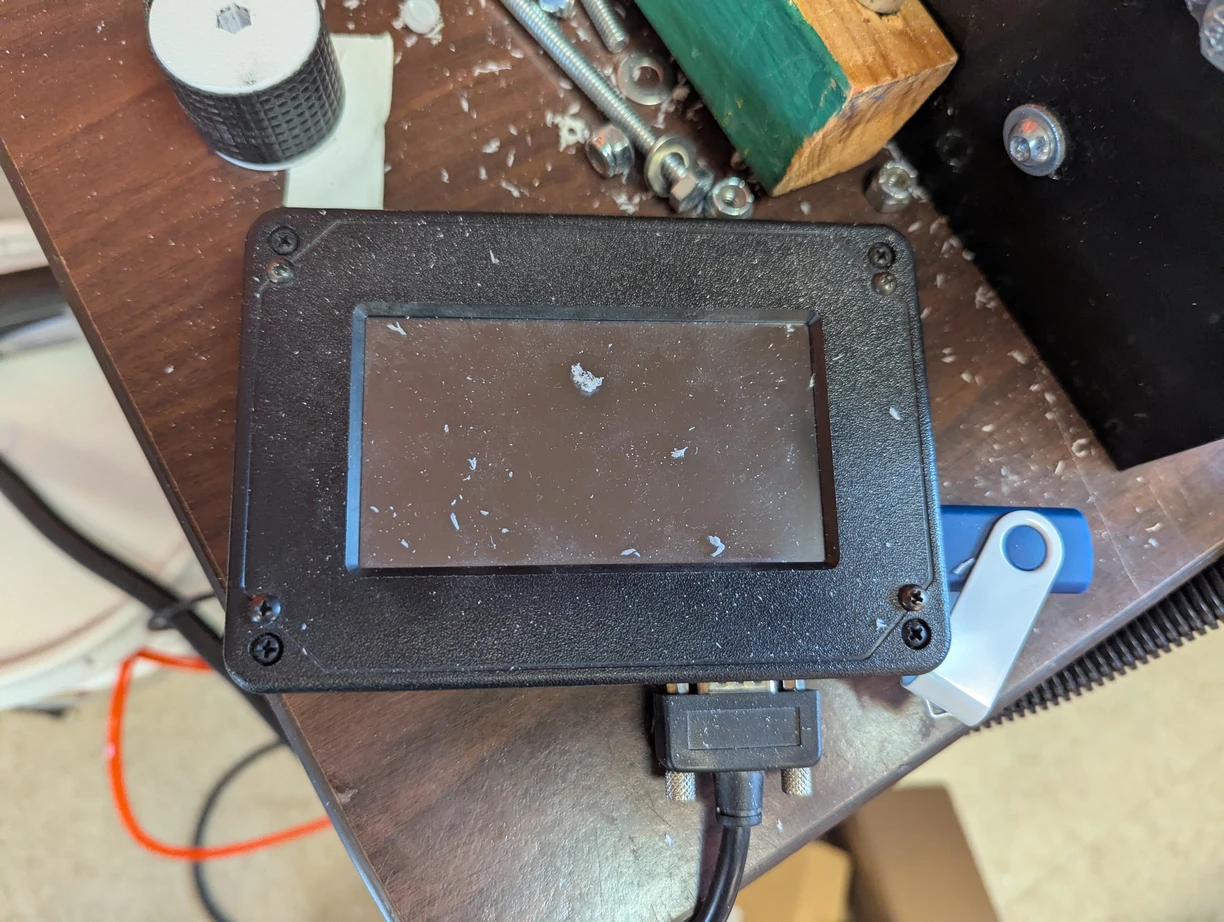
The pendant is the part with the touchscreen. It is where you can control the machine, including manually moving ("jogging") the spindle around. The pendant also has a USB port; to upload gcode files to actually run the machine, stick a flash drive with them in here.
Using the touchscreen
The pendant has a resistive touchscreen, not a capacitive one. Essentially, it operates via pressure, detecting when the two layers of the touchscreen touch. This means you can use the it with gloves on! It doesn't care what the thing touching it is made out of. On the other hand, the touchscreen is AWFUL to use. It's imprecise and requires a decent amount of pressure to detect anything. Don't expect it to work as well as a phone screen.
My recommendation: use your nails.
VFD
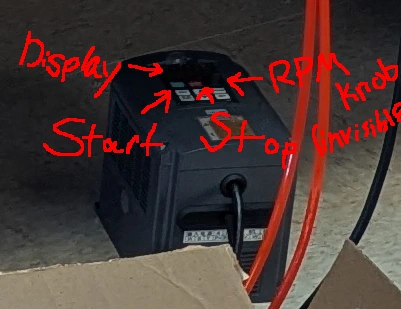
I forgot to take a picture of it. Oops.
The VFD (variable-frequency drive) supplies the power to the spindle. It has a LOT of settings hidden inside, but the only things you should be messing with are the speed knob and stop/start buttons. You'll be operating in a small range of speeds most of the time, and most adjustments to the knob will just be a couple degrees (it is very sensitive).
Controller
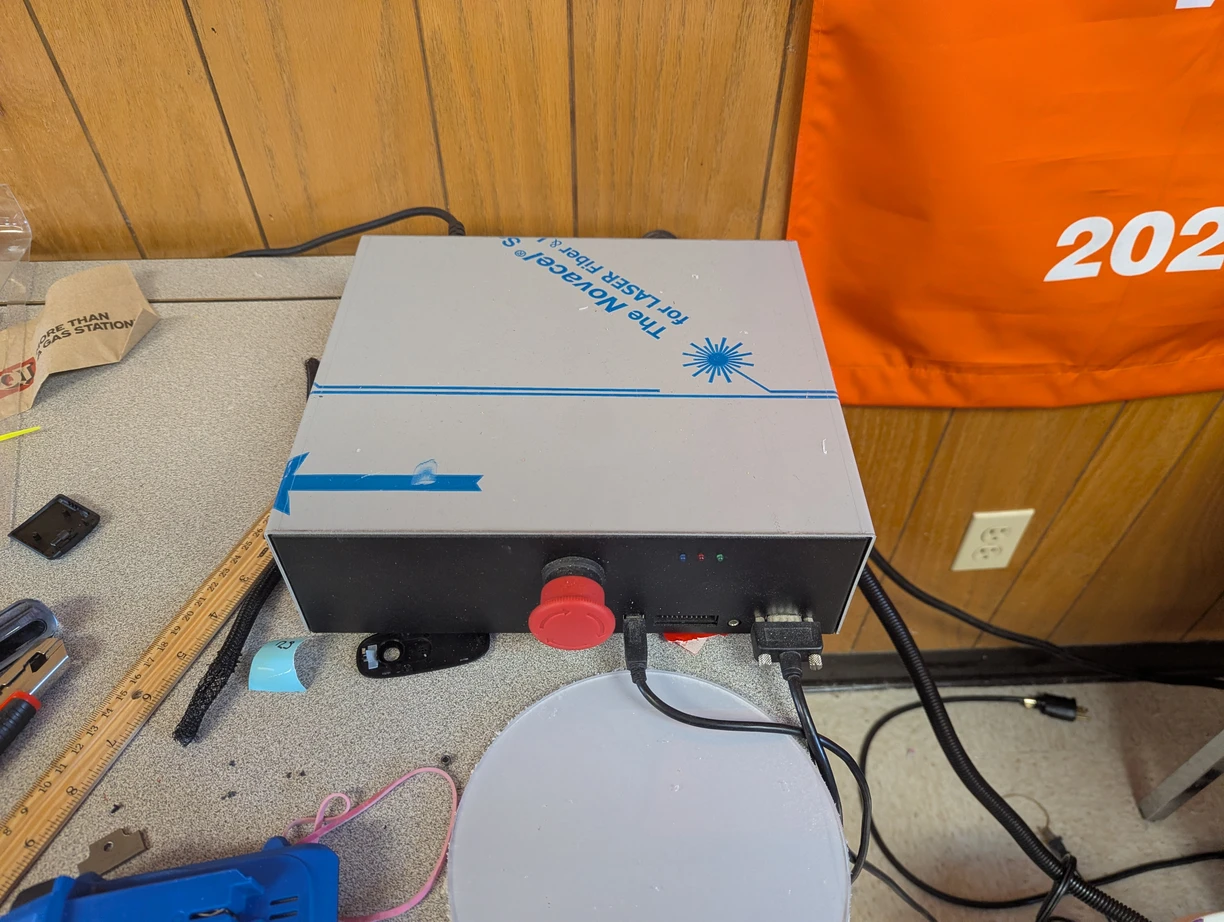
The controller is the box that holds the "brains" of the CNC. The pendant, VFD, and all of the CNC's stepper motors plug into here. It is also home to the off switch and emergency stop.
Use the emergency stop with caution
The emergency stop doesn't stop the spindle. The bit stays spinning and powered after the emergency stop is triggered. All the emergency stop does is kill the power to all the stepper motors, which, because the spindle can't stay up without power, usually just drops the spinning bit through the workpiece, through the wasteboard, and into the metal bed.
Just use the pause button on the pendant, which will keep the spindle supported, or the stop button on the VFD, which will actually kill power to the spindle. Only use the stop if some body part is pinched in the machine or something.
Spindle
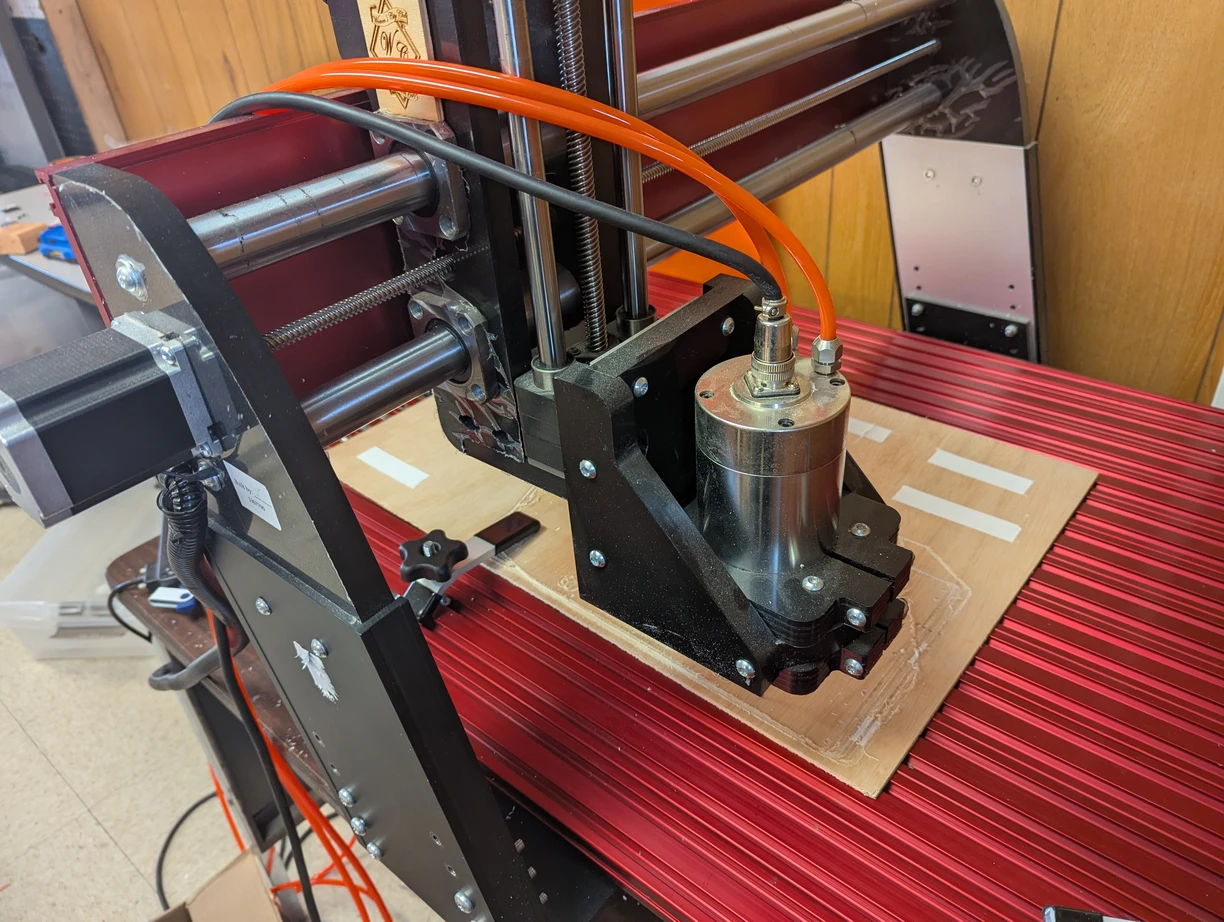
The spindle is the part that spins the bit, the sharp thing that cuts the material. As stated above, it can go between 8,000 to 24,000 rpm.
It's also watercooled - the orange tubes lead back to the bucket, which is filled with distilled water and has a pump submerged inside. One tube brings the cool water from the pump to the spindle, where it cools down the motor (and heats up in the process). Then, it goes out the other orange tube, which hangs loose in the bucket.
The bits are mounted in an ER11 collet, which is significantly different from the drill-chuck-style mounting you may be used to. Make sure you know what you are doing before attempting to mess with it.
Bed
The bed is the red metal surface that everything sits on. It's made out of aluminum extrusion and has T-tracks in it, which are used by the clamps.
You basically always want a spoilboard between the bed and what you're cutting; otherwise, it'll either not cut deep enough to separate the part from the rest of the stock or start cutting into the bed (hopefully, it's obvious why this is bad).
Normally, you'd want something uniform like MDF that's flattened with a special surfacing bit, but we don't have time nor money so it's a piece of scrap plywood for now. It's not flat at all, basically guaranteeing you need to cut into it to fully separate the part, but it's fine for our usecase.
Gantry
The gantry is the part that moves back-and-forth along the bed. It's moved by a lead screw under the bed. It's also missing some bolts on the sides. I do not know what the replacement size is. Will you be the one to attach the missing bolts?