Screws
Screws: use them to attach things together. Or don't.
Anatomy of a screw
The theory of screws
What does it mean to "tighten" a screw?
On lefty-loosey, righty-tighty
(For the uninitiated: this is a common saying to help with remembering which direction to turn a screw.)
Yes, this doesn't really make sense. There isn't really a "left" or a "right" when rotating a screw. If the saying isn't intuitive for you, here's the real relationship:
Clockwise to tighten, counterclockwise to loosen
Here's an example: we have a screw and on it a nut, with two plates in between that we want to join:

When we turn the screw, the threads move the head of the screw (the big piece at the top) and the nut closer together. Once the screw and nut hit the plates, the screw stretches slightly. This deformation applies force to the plates, clamping them together.
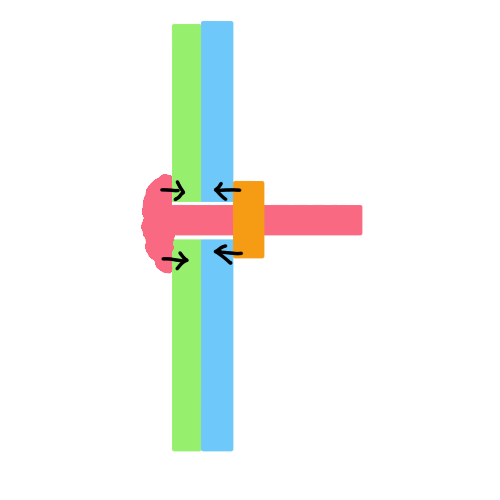
While this is a basic example, the same idea applies almost any time we use a screw.
One thing to watch out for is that anything threaded - for example, threaded holes and even wood, if not drilled out to a large enough size - behave like nuts: they will engage with the screw threads and move up and down the screw as it turns. In this example, we assumed the holes in the plates were large enough to not thread into the screw.
Screw Mistakes
Screws and how they work might seem like a basic concept to cover, and they are. That doesn't mean they are without pitfalls, however. Here are a few possible errors:
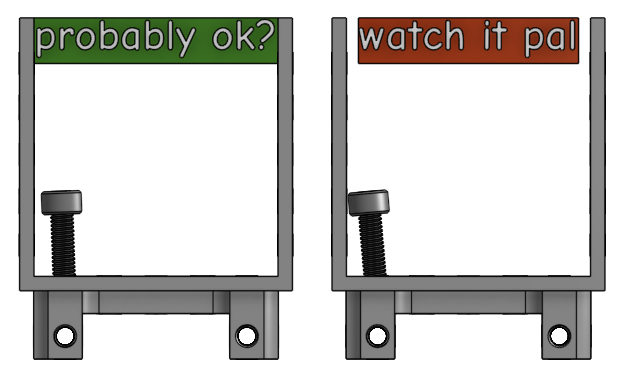
Putting more than one threaded element on a screw
This technically isn't an issue in and of itself. For example, a legitimate use case is when using jam nuts. The issue arises when the threading interferes with the function of the screw - clamping things together. A common case is using a screw to attach two pieces of wood.
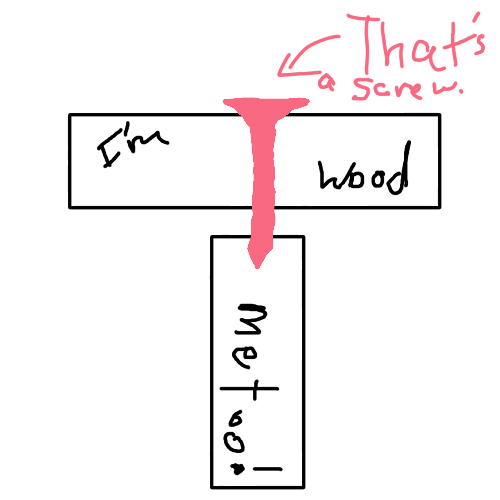
The screw is engaging with both pieces of wood simultaneously. Now watch what happens when we turn the screw further:
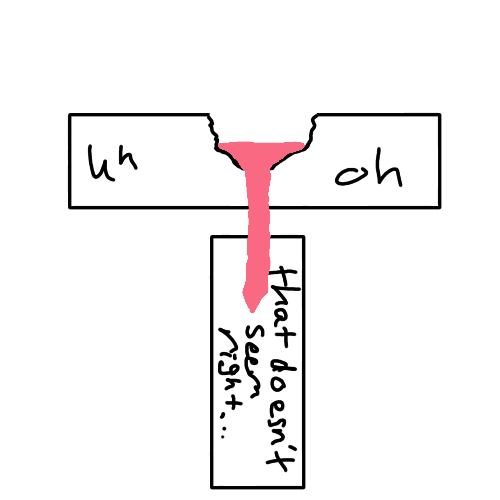
Instead of pushing the two pieces of wood together, the screw just went deeper into the wood! What happened?
When we turned the screw, it went deeper into the bottom piece of wood. However, its threads also engaged into the top piece of wood, and the screw went deeper into the top piece by the same amount. The end result is that the distance between the two pieces of wood stayed the same: the only thing that changed was the position of the screw.
This is a problem because the strength of a screwed joint depends on the physical connection between the two things being joined. In a joint like this, all the force is put on the screw, which was designed for tension (stretching) only.
The gap between the two pieces of wood is exaggerated in this example. In real life, holding the wood together while driving the screw in can hide this issue. However, the screw is still not doing any clamping (sacrificing strength), and if the joint loosens over time it will be impossible to tighten.
This mistake is very common. Always check which things on your screw are threaded on/engage with its threads; if there is more than one, reconsider what you are doing.
Not holding the nut
This one is pretty simple. When a nut is on a screw, it usually has at least some friction with the screw. If you don't stop the nut from rotating while turning the screw, it'll turn with it and nothing gets tightened. You usually need a wrench. After a certain point, your fingers won't cut it.
Stripping the head
Another common mistake, and a very bad one. Stripping a screw involves damaging the head's drive (hex, Phillips, Torx (??)) enough to the point where it no longer functions to turn the screw. Here's a particularly bad example, courtesy of redditor TheInfamousDannyB:
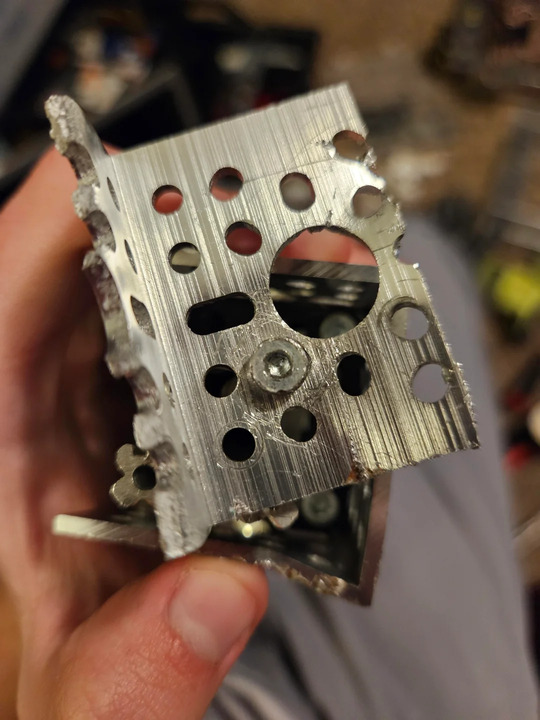
Notice how the hole in the screw is almost round. It is not supposed to be round. It is supposed to be hexagon-shaped. Once it gets this bad, usually the only option to take the screw out is by cutting a slot in the middle to make a space for a flathead.
Stripping happens when too much torque is applied to the screw's drive and the driver slips, deforming the slot. You can usually feel this before it's coming, followed by a "bump" as the screwdriver/hex key slips. If you feel a bump, STOP and inspect the screw/feel the hex key on the head for looseness. Toss the screw if it appears stripped.
Stripping the hole
Less common but not impossible. This doesn't really happen with nuts, which are made from steel, but can with threaded holes in softer materials like aluminum. Essentially, the screw exerts enough force on the threaded hole to rip out all the material holding it in, permanently mangling the hole.
Always ensure screws go decently deep into the threaded hole to avoid this.
Crossthreading
Crossthreading happens when the screw goes into the threaded hole (rarer with nuts) at an angle. This also permanently damages the threaded hole, and prevents the screw from going fully into/through it.
To prevent crossthreading: just ensure the screw is straight, especially if it's being pushed sideways while you're trying to screw it in. Generally you should feel uniform, constant resistance while screwing in a screw until the very end. If it starts getting a lot more difficult earlier than you expect, STOP and make absolutely sure the screw is not slanted before continuing.
Tip
In my experience, screws need to be tilted fairly far before they'll start crossthreading. If there's only a slight deviation, you might be able to (cautiously) continue.
Types of screws
This list is comprehensive. And that's a fact!
What about bolts?
Technically, there is a difference between a "bolt" and a "screw". Bolts use nuts to fasten things together, and screws don't. The difference really doesn't matter that much in practice, though, so I'll just call both screws.
In general, I'll be playing a little fast-and-loose with definitions in this section. It's just a form of classifying fasteners. Don't thnk about it too hard.
Machine screws
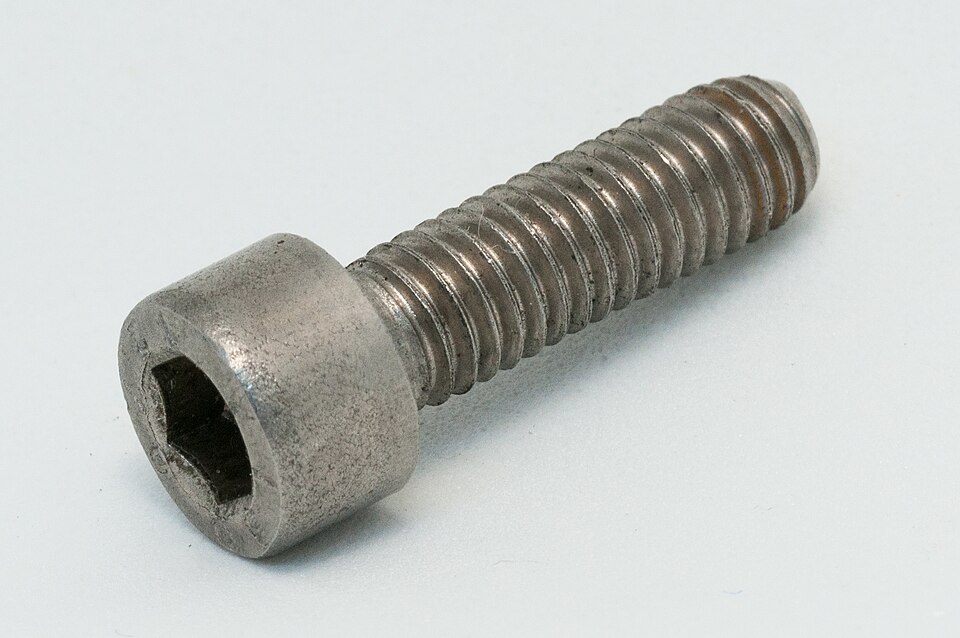
Machine screws are characterized by finer and less prominent threads. They are very common in FTC. Not recommended to attempt to thread these into soft materials like wood or plastic; stripping is common and almost inevitable for smaller screw sizes.
Wood screws
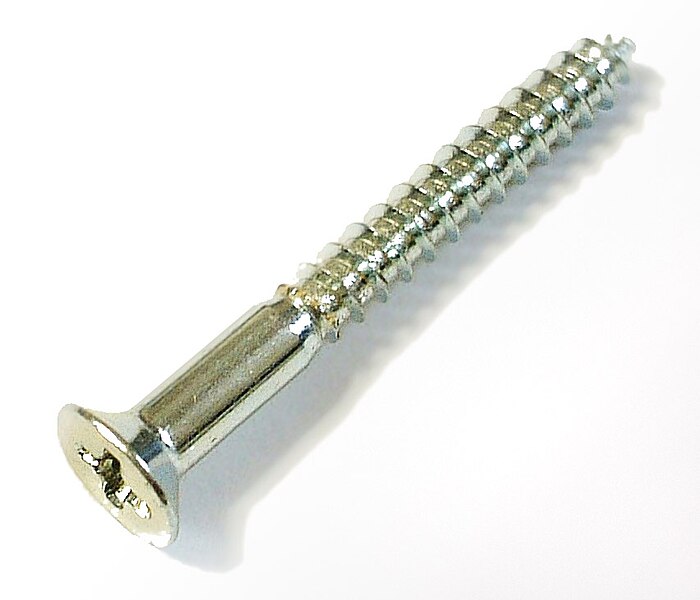
Beefier thread, pointed tip, usually countersunk head. Used for wood purposes (duh!). Some have a unthreaded, long shank for use in screwing two pieces of wood together, avoiding the problems with double-threading mentioned earlier.